
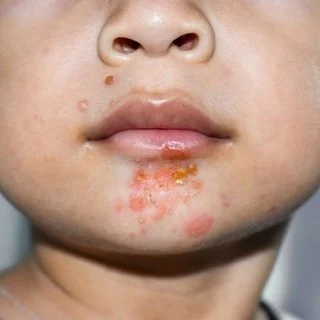
Impetigo

Impetigo is a common bacterial skin infection that typically affects young children. It is most often caused by a bacteria called Staphylococcus aureus or Streptococcus pyogenes. Affected individuals present with sores that break open leading to honey-colored crusts and scabs. Though lesions can be found anywhere, the face (around the nose and mouth) and extremities…

Genital Herpes

Genital herpes is a sexually transmitted infection caused by an infection with the herpes simplex virus (HSV). There are two types of the herpes simplex virus- herpes simplex virus type 1 (HSV-1) and herpes simplex virus type 2 (HSV-2). Either type can cause genital herpes, but HSV-2 is responsible for most cases. Affected individuals suffer…

Cellulitis

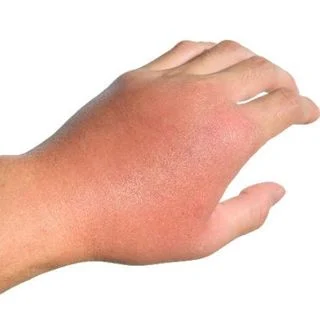
Cellulitis is a common bacterial infection of the deeper structures of the skin. The infection presents as a focal area of redness, swelling, and pain which is warm to the touch. These skin findings can be accompanied with fevers, chills, fatigue, and malaise. Cellulitis can affect any part of the body, but is common on…

Candidiasis

Candidiasis is an infection caused by the yeast Candida. Candida skin infections (cutaneous candidiasis) can occur at any site, but tends to favor warm, damp environments such as the skin folds and the groin region. Candida infections can also occur in the mouth (oral thrush) and in or around the nails (paronychia or onychomycosis). Young…

Sunscreen

Sunscreen use is critical to protecting your skin from UV radiation. Wearing the right sunscreen will allow you to maximize your time in the sun while being protected from its harmful rays. Dermatologists recommend picking a broad spectrum sunscreen (one which blocks both UVA and UVB rays) with an SPF of 30 or higher. Apply…

Sun Safety

Protection from UV radiation is important all year round, even on cloudy or cold days. UV radiation can even reflect off water, sand, and snow. Below are some tips on sun safety: Use sunscreen. Pick a broad spectrum sunscreen (one which blocks both UVA and UVB rays) with an SPF 30 or higher. Apply liberally,…

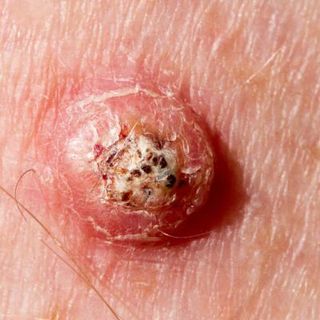
Squamous Cell Carcinoma

Squamous cell carcinoma is the second most commonly occurring type of skin cancer. It appears most frequently in areas that are exposed to direct sunlight, such as the face, nose, ears, lips, neck, and back of the hands. Squamous cell carcinomas can present as rough, scaly, red patches; wart or horn-like lesions; or tender, crusted…

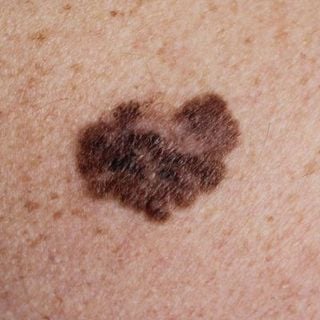
Melanoma

Melanoma is a type of skin cancer originating from the pigment producing cells in the skin called melanocytes. Though not as common as basal cell carcinoma and squamous cell carcinoma, it is more deadly because of its ability to spread to other parts of the body. Melanomas can have various appearances. The ABCDEs and Ugly…